
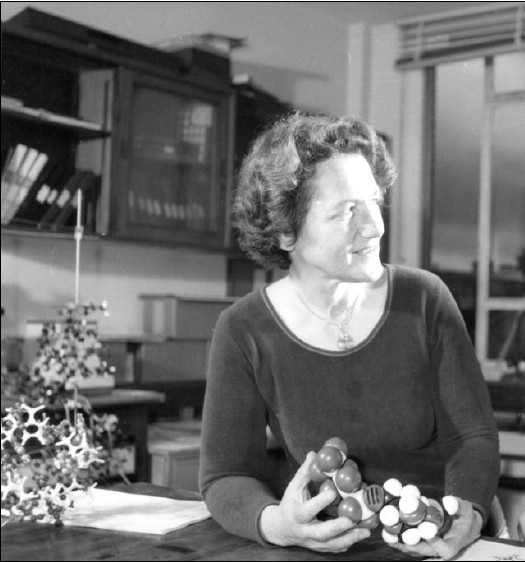
Image of Olga Kennard
“The beginnings of the Cambridge Structural Database (CSD) go back to 1965, when J.D. Bernal and Olga Kennard had a vision that the collective use of data would lead to the discovery of new knowledge. 60 years later, the CSD is the world’s largest database of experimentally observed small molecule crystal structures.
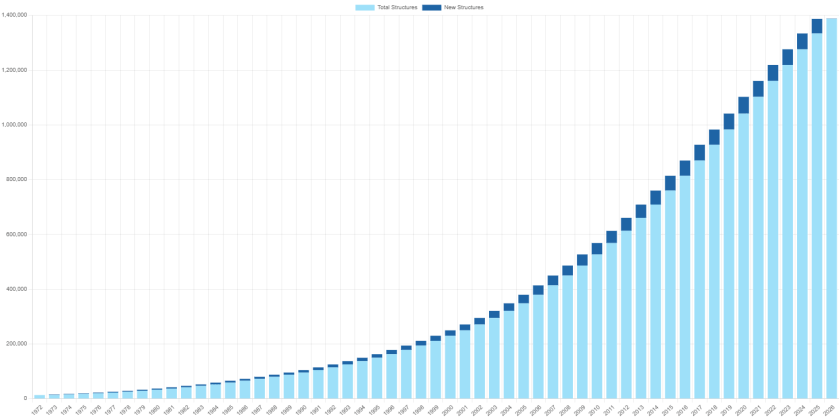
Today, the CSD contains more than 1.3 million organic and metal-organic experimental crystal structures, contributed by over half a million authors from more than 110 countries. Data is shared via scientific articles, patents, theses, institutional repositories, and directly through CSD Communications. Each entry is curated and enriched by editors at the Cambridge Crystallographic Data Centre (CCDC), the non-profit organisation that curates the CSD.”
Read the full text: RSC CICAG Newsletter Winter 2025-26, pages 64-66. (PDF)
CSD Growth by Year
Access Structures is the CCDC’s Cambridge Structural Database and FIZ Karlsruhe’s Inorganic Crystal Structure Database free service to view and retrieve structures.
 Chemical Structure Association Trust