Applications Invited for CSA Trust Grants for 2026

The deadline for the 2026 Grant applications is April 17, 2026. Successful applicants will be notified no later than May 30, 2026.

The Chemical Structure Association (CSA) Trust is an internationally recognized organization established to promote the critical importance of chemical information to advances in chemical research.  In support of its charter, the Trust has created a unique Grant Program and is now inviting the submission of grant applications for 2026.

Purpose of the Grants: 

The Grant Program has been created to provide funding for the career development of young researchers who have demonstrated excellence in their education, research or development activities that are related to the systems and methods used to store, process and retrieve information about chemical structures, reactions and compounds.  One or more Grants will be awarded annually up to a total combined maximum of ten thousand U.S. dollars ($10,000).  Grantees have the option of payments being made in U.S. dollars or in British Pounds equivalent to the U.S. dollar amount. Grants are awarded for specific purposes, and within one year each grantee is required to submit a brief written report detailing how the grant funds were allocated. Grantees are also requested to recognize the support of the Trust in any paper or presentation that is given because of that support.

Who is Eligible?

Applicant(s) in the early stages of their career who have demonstrated excellence in their chemical information related research and who are developing careers that have the potential to have a positive impact on the utility of chemical information relevant to chemical structures, reactions, and compounds, are invited to submit applications. Applicants must be within five years of obtaining their PhD. Note that proposals from those who have not received a Grant in the past will be given preference. While the primary focus of the Grant Program is the career development of young researchers, additional bursaries may be made available at the discretion of the Trust.  All requests must follow the application procedures noted below and will be weighed against the same criteria.

Which Activities are Eligible?

Grants may be awarded to acquire the experience and education necessary to support research activities, e.g., for travel to collaborate with research groups, to attend a conference relevant to one’s area of research (including the presentation of an already-accepted research paper), to gain access to special computational facilities, or to acquire unique research techniques in support of one’s research. Grants will not be given for activities completed prior to the grant award date. Funding for 2026 will not be extended beyond December 31, 2026.

Application Requirements

Applications must include the following documentation:

  1. A letter that details the work upon which the Grant application is to be evaluated as well as details on research recently completed by the applicant.
  2. The amount of Grant funds being requested and the details regarding the purpose for which the Grant will be used (e.g., cost of equipment, travel expenses if the request is for financial support of meeting attendance, etc.). The relevance of the above-stated purpose to the Trust’s objectives and the clarity of this statement are essential in the evaluation of the application).
  3. A brief biographical sketch, including a statement of academic qualifications and a recent photograph. 
  4. Two reference letters in support of the application.  Additional materials may be supplied at the discretion of the applicant only if relevant to the application and if such materials provide information not already included in items 1-4.   A copy of the completed application document must be supplied for distribution to the Grants Committee and can be submitted via regular mail or e-mail to the Committee Chair (see contact information below).

Deadline for Applications

The deadline for the 2026 Grant applications is April 17, 2026. Successful applicants will be notified no later than May 30, 2026.

Address for Submission of Applications

The application documentation can be mailed via post or emailed to:  Bonnie Lawlor, CSA Trust Grant Committee Chair, 276 Upper Gulph Road, Radnor, PA 19087, USA.  If you wish to enter your application by e-mail, please contact Bonnie Lawlor at chescot@aol.com prior to submission so that she can contact you if the e-mail does not arrive.

Chemical Structure Association Trust:  Recent Grant Awardees

2025

Dr. Haoxin Mai, a Research Fellow at the Advanced Porous Materials Laboratory at the School of Science, RMIT University, Melbourne, Australia, was awarded $3,177 (U.S.) to support an overseas visit to Prof. Quan Phung’s laboratory in Nagoya university, Japan, and Dr. Dieb Sae’s laboratory at the National Institute for Materials Science (NIMS), Japan. He will be involved in a project to develop an effective model for the design of highly-efficient and economical photocatalysts for solar-driven hydrogen production. The strategy to achieve this is to use Machine Learning techniques and theoretical calculations to study the structure-property relations and guide the design and synthesis of metal-ion-doped SrTiO3 nanoparticles. The construction of ML models and the application of density functional theory (DFT) calculations will reveal the underlying structure-property relationships and identify design rules or doped SrTiO3 nanoparticles with high solar-to-hydrogen conversion efficiency.

Dr. Kohulan Rajan, a Postdoctoral researcher in Prof. Christoph Steinbeck’s group at Friedrich Schiller University Jena focusing on building practical tools that help scientists extract, understand, and share chemical Information more effectively, was awarded $3,500 (U.S.) to attend one of three conferences that are directly relevant to his research in chemical information science and AI-driven cheminformatics (ICANN 2025, ICDAR 2025, and the 8th RSC AI in Chemistry symposium).

Julia Kaczmarek, currently a PhD student at the University of Manchester, U.K., was awarded $2,977 (U.S.) to fund a research visit to Dr. Juan V. Alegre Requena’s group at the University of Zaragoza, Spain from October to December of 2025. The visit is crucial to her development of an automated software tool for mechanistic studies in catalysis, combining cheminformatics, quantum chemistry, and Machine Learning. She will be working with Dr. Alegre Requena, Dr. David Dalmau, and Miguel Fernandez who will help in accelerating the tool development.

2024

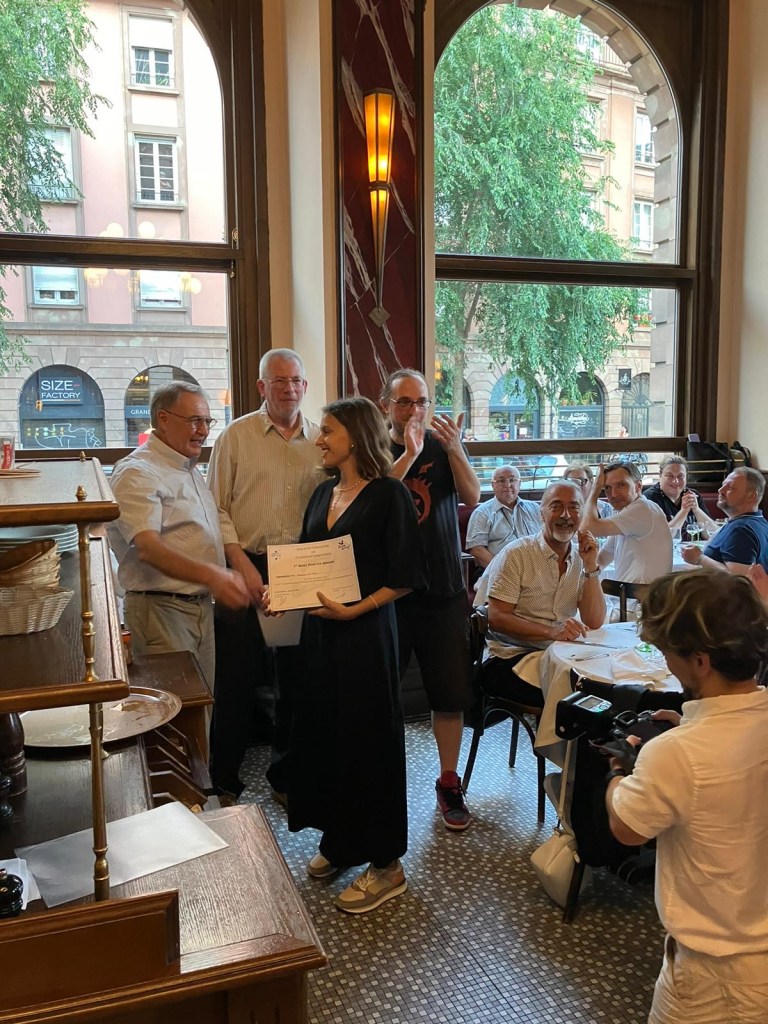
Ariadna Peiro, a PhD student in the Cheminformatics and Nutrition Research Group at  Rivira i Virgili University, Spain, was awarded1,858 Euros to attend summer courses at the Strasbourg summer school in Cheminformatics.  While there she won the best Poster prize. Her thesis focuses on the fields of virtual screening and drug discovery, with an emphasis on SARS-CoV-2 Proteases. She is involved in a project called NEXT-PANDEMICS that was created after the coronavirus pandemic in response to the vast amount f data generated from vaccine and antiviral research. The main objective of the project is to develop new open-source tools to enhance the effectiveness of virtual screening and predict binding affinity in silico. Additionally, these tools will be applied to determine a list of leads to search for antivirals. Moreover, this discovery would be applied to Zika and Dengue viruses.

Nils van Staalduinen, a PhD candidate at the Institute for Physical Chemistry, RWTH Aachen Germany, was awarded 4,530 Euros that will be allocated as follows: financial support for research visits to the laboratory of Professor Todd Martinez for the integration of MolBar into the Nanoreactor at Stanford University (CA) and payment of travel expenses to attend two conferences –  the 2024 German Cheminformatics Conference and the 2024 RDKit UGM. His research concentrates on MolBar, a molecular identifier for chemical structure databases. MolBar was launched in March 2024 and has since been downloaded several hundred times. He balances his PhD work with a role at BASF SE, where he further develops chemical database pipelines with a focus on cheminformatics algorithms that streamline molecule registration and tautomer searchers.

Ivan Yankov, a PhD student at the University of Strathclyde (U.K), was awarded 2,815 Euros in support of his travel for a month-long visit to the BioNMR group, ETH Zurich where he will be extending his research. In addition, he will present his research findings at a related conference. His research is focused on integrating Artificial Intelligence (AI)  methods into computational design across drug discovery, drug development, and structure determination of biological materials, with the goal of accelerating in-silico design pipelines by modelling thermodynamic properties of nucleic acids and their complexes.

2023

David Dalmau Ginesta, who was developing cheminformatics and machine learning tools applicable to various sectors of computational chemistry, was awarded $2,100 to attend two international conferences (the RSEQ XXXIX Biennial Meeting in Zaragoza (Spain), June 25-29, 2023, and the ACS fall national meeting in San Francisco (USA), August 13-17, 2023.

Heidi Klem, who received her PhD from Colorado State University (USA) in June 2023 and was selected to be a National Research Council postdoctoral associate at the U.S. National Institute of Standards and Technology (NIST) as of August 2023, was awarded $3,700 to spend a month visiting Professor Zhongyue John Yang at Vanderbilt University, Nashville, TN (USA) for one month. Prof. Yang is the SC Family Dean’s Faculty Fellow and an Assistant Professor of Chemistry, Chemical Engineering, and Data Science.

Dr. Md Bin Yeamin, a postdoctoral fellow at the University of Girona, researching dual catalysis in alkyne functionalization and  predictive catalysis in hydrogenation and CO2 fixation, was awarded.

$1,330to be used towards a month-long research stay at the Alegre group at ISQCH Institute of CSIC-Universidad de Zaragona to launch a collaborative project on predicting catalytic performances and reaction mechanisms from data-driven automated machine learning (ML) methods and to give an oral presentation at the XXXIX Biennial Meeting – Spanish Royal Society of  Chemistry (RSEQ) 2023 under the symposium S15. Recent trends in organometallic  Reactivity.         

2022

Dr. Juan V. Alegra Requena, of the University of Zaragoza, Spain where he was establishing his own research group focusing on computational mechanisms and Machine Learning, was awarded

$1,892 for travel to present his work at the RSEQ XXXVIII Biennial meeting in Granada, Spain in June, 2022 and the 8th EuChemS Chemistry Congress in Lisbon, Portugal in September 2022.

Dr. Beatrice Chiew is a postdoc at the University of Newcastle, Australia, where she was 

working on drug development in the space of Dynamin endocytosis inhibitors, was awarded $4,034 to present her work at the Royal Australian Chemistry Institute National Congress in July 2022 and the EFMC International symposium on medicinal chemistry in September 2022.

2021

Call for Grant proposals not circulated due to the pandemic.

2020

Daniel Csókás, a member of Professor Imre Pápai’s research team at the Research Centre for Natural Sciences, Budapest, Hungary was awarded $,4000 to travel to the University of Bristol (UK) to expand the scope of his experience in computational chemistry and to acquire new skills and research techniques in the area of data-led catalyst design. The project will involve the creation of a ligand knowledge base for tridentate ligands using calculated descriptors. The database will then be processed to retrieve structural and reactivity information about tridentate ligands and their transition metal complexes. The award is pending the lifting of travel restrictions due to the pandemic.

Andrew Tarzia, a Research Associate at the Imperial College London, was awarded $3,500 to visit Asst. Prof. Cory Simon at Oregon State University for three weeks in 2021 to initiate a collaboration in the use of machine learning algorithms to predict host-guest finding affinities based upon molecular shapes. The award is pending the lifting of travel restrictions due to the pandemic.  

Nicola Knight, an Enterprise Research Fellow – Physical Sciences Data-Science Service (PSDS) at the University of Southampton (UK) where she works with the newly-established national research facility to provide access to chemistry and physical sciences data at a national scale and to increase not only the breadth of the data, but also the ways in which the data can be used by the scientific community. She was awarded $2,500 to fund efforts related to a knowledge sharing retreat that will involve four early-career researchers (ECRs) from a cross section of research domains to participate in a 3-day workshop on the depiction of chemical information using the FAIR principles.
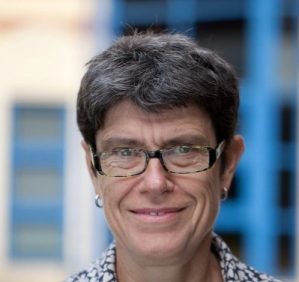
Mike Lynch Award 2025: Val Gillet

In recognition of her pioneering research in chemical structure analysis, visionary educational leadership, and enduring dedication to advancing scientific collaboration, Professor Val Gillet has been awarded the 2025 Mike Lynch Award by the Trustees of the CSA Trust.

The Trustees are proud to honor Professor Gillet for her outstanding and innovative contributions to the field of Chemoinformatics. Her influential body of work – widely cited and highly regarded – has shaped the Chemoinformatics landscape and driven progress in pharmaceutical research and development.

In parallel with her research achievements, Professor Gillet has played a central role in building and refining the Chemoinformatics educational program at the University of Sheffield. Under her supervision, the program has earned international recognition as a hub of excellence for research and training. She is also co-author of a foundational textbook that remains a key reference in the field.

Beyond her academic accomplishments, Professor Gillet has been instrumental in fostering collaboration and visibility within Chemoinformatics. Her longstanding support of the Cheminformatics Conference in Sheffield and the International Conference on Chemical Structures in Noordwijkerhout has helped elevate them to the field’s most prominent international gatherings.

Val Gillet is a Professor of Chemoinformatics at the University of Sheffield, where she leads the Chemoinformatics Research Group within School of Information, Journalism and Communication.

https://www.linkedin.com/in/val-gillet-15a60429/

https://www.sheffield.ac.uk/ijc/people/val-gillet

The CSA Trust is an internationally recognized, registered charity that promotes education, research, and development in fields related to chemical structures and cheminformatics.

Professor Michael Felix Lynch

February 21, 1932 – November 15, 2024

One of the pioneers of chemical information, Michael (Mike) Felix Lynch, has died at the age of 92. Mike obtained B.Sc. and Ph.D. degrees in chemistry at University College, Dublin before conducting postdoctoral research at ETH Zürich with Vladimir Prelog, the recipient of the 1975 Nobel Prize for chemistry. He then worked for two years with Ciba-Geigy in Cambridge U.K., before moving to the United States in 1961 to work for Chemical Abstracts Service (CAS). At this time, CAS was conducting some of the first research anywhere on the use of computers to build searchable databases of both journal abstracts and of the structures of chemical compounds, and Mike directed much of this work when he became Head of the Basic Research Department.1,2

On returning to the United Kingdom in 1965, he was awarded a research grant by the Office of Scientific and Technical Information to conduct studies of the automatic indexing of textual documents. He joined the University of Sheffield’s Postgraduate School of Librarianship (as it was then named, now the Information School) to conduct this research, and spent the rest of his career there until his retirement in 1997. Mike can truly be regarded as the founding father of information science research at Sheffield: starting as a Senior Research Fellow, he joined the permanent staff in 1968, and in 1974 he was appointed to the personal chair which made him the first professor of information science in the United Kingdom.

Mike’s initial research in Sheffield involved the development of methods for the automated production of articulated subject indexes such as those used in the CAS subject indexes.3 This work was followed by initial studies of techniques for the indexing, storage, and retrieval of chemical reaction information. These studies, which focused on the identification of the reaction center involved in a transformation, continued for over a decade before the development of graph-matching techniques that, after extensive subsequent refinement, underlie modern reaction retrieval systems.4,5 While this work was under way he started to develop and test systematic approaches for the selection of fragment substructures6 for screening chemical substructure searches, and was also responsible for probably the first book anywhere on the computer handling of chemical structures.7 In addition to their use in chemical information systems, the selection techniques developed for screening subsequently found application in several types of textual processing, for example, for compression, for sorting, and for searching online catalogs.8

Much of the second half of Mike’s Sheffield career, from 1980 onwards, was devoted to the development of techniques for the representation, storage, and retrieval of the generic (Markush) structures that characterize many chemical patents. This work extended over some 15 years and was carried out in collaboration with CAS, Derwent, and International Documentation for Chemistry (IDC).9,10 Other areas of interest in this period included the use of parallel computer architectures for database searching11 and the application of natural language processing methods to the textual components of chemical patents.12

When Mike arrived in Sheffield in the mid-1960s, there was very little computer-related research being undertaken in library schools in the United Kingdom. His work established a tradition that has enabled the Sheffield school to play a leading role over the years in the development not just of chemical information but also of information science more generally, with several of the researchers that he supervised subsequently following academic careers in Sheffield.

During his career he received many awards, perhaps most notably the 1989 Herman Skolnik Award of the ACS Division of Chemical Information for his “pioneering research of more than two decades on the development of methods for the storage, manipulation, and retrieval of chemical structures and reactions as well as related bibliographic information”. A further mark of recognition was the 2002 creation by the Chemical Structure Association Trust of an award in his name to recognize and encourage “outstanding accomplishments in education, research, and development activities that are related to the systems and methods used to store, process, and retrieve information about chemical structures, reactions, and properties”.

Mike had a huge impact not just on our own careers, but upon the whole profession, yet he will be remembered not only for his outstanding professional achievements, but also for his remarkable personal qualities. He was a practicing Roman Catholic and a devoted family man. He loved classical chamber music. He was kind and gently spoken. To journal editors who needed papers reviewing, Mike was known as a real “softie”: he looked for the value in everyone’s work and was never excessively critical. These qualities are well illustrated by the comments of one of his doctoral students, John Barnard: “Mike was generous in the independence he gave his students, without in any way stinting in the support he offered. When he was invited to talk about the Sheffield Generic Chemical Structures project at a conference, just six months after its inception, he immediately suggested that my fellow student on the project, Steve Welford, and I should do the talking instead. That immediately projected Steve and me into the center of the international chemical information community and provided us with contacts that directly benefited our subsequent careers. Mike involved us in all aspects of the development of the project, including discussions with potential funders, recruitment of additional staff, and as shareholders in its commercial exploitation. Mike’s easygoing and gentle Irish character made him an ideal companion on social occasions, whether in the bar at conferences, for pub lunches, or at the informal dinners at his home so often given for scientists visiting our project. I literally owe my entire career in chemical information systems to Mike, and it was a privilege and a pleasure to have been one of his students”.

Michael’s first wife, Mary, died of a heart condition in 1993. In 1995, he married Mary Dykstra, a professor at Dalhousie University in Halifax, Nova Scotia, Canada who had studied in Michael’s department at the University of Sheffield. They had a long and happy retirement, traveling extensively and living in both Sheffield and Nova Scotia. Mary survives him. Our sympathies also go to Catherine and Kevin, his children by his first wife; his stepsons, Mark and Jeffery Dykstra; his eight grandchildren; and other members of his extended family worldwide.

References

  1. Dyson, G. M.; Lynch, M. F. Chemical-biological activities: a computer-produced express digest. J. Chem. Doc. 1963, 3, 81-85. https://doi.org/10.1021/c160009a011
  2. Cossum, W. E.; Krakiwsky, M. L.; Lynch, M. F. Advances in automatic chemical substructure searching techniques. J. Chem. Doc. 1965, 5 (1), 33-35. https://doi.org/10.1021/c160016a006
  3. Armitage, J. E.; Lynch, M. F. Articulation in the generation of subject indexes by computer. J. Chem. Doc. 1967, 7 (3), 170-178. https://doi.org/10.1021/c160026a010
  4. Armitage, J. E.; Lynch, M. F. Automatic detection of structural similarities among chemical compounds. J. Chem. Soc. C 1967, 521-528. https://doi.org/10.1039/j39670000521
  5. Lynch, M. F.; Willett, P. The automatic detection of chemical reaction sites. J. Chem. Inf. Comput. Sci. 1978, 18 (3), 154-159. https://doi.org/10.1021/ci60015a009
  6. Adamson, G. W.; Cowell, J.; Lynch, M. F.; McLure, A. H. W.; Town, W. G.; Yapp, A. M. Strategic considerations in the design of a screening system for substructure of chemical structure files. J. Chem. Doc. 1973, 13 (3), 153-157. https://doi.org/10.1021/c160050a013
  7. Lynch, M.; Harrison, J. M.; Town, W. G.; Ash, J. Computer Handling of Chemical Structure Information, Macdonald, London and American Elsevier, New York, 1971. http://openlibrary.org/books/OL4770313M/Computer_handling_of_chemical_structure_information
  8. Lynch, M. F. Variety generation—a reinterpretation of Shannon’s mathematical theory of communication, and its implications for information science. J. Am. Soc. Inf. Sci. 1977, 28 (1), 19-25. https://doi.org/10.1002/asi.4630280104
  9. Lynch, M. F.; Barnard, J. M.; Welford, S. M. Computer storage and retrieval of generic chemical structures in patents. 1. Introduction and general strategy. J. Chem. Inf. Comput. Sci. 1981, 21 (3), 148-150. https://doi.org/10.1021/ci00031a009
  10. Lynch, M. F.; Holliday, J. D. The Sheffield generic structures project-a retrospective review. J. Chem. Inf. Comput. Sci. 1996, 36 (5), 930-936. https://doi.org/10.1021/ci950173l
  11. Brint, A. T.; Gillet, V. J.; Lynch, M. F.; Willett, P.; Manson, G. A.; Wilson, G. A. Chemical graph matching using transputer networks. Parallel Comput. 1988, 8 (1), 295-300. https://doi.org/10.1016/0167-8191(88)90133-0
  12. Lawson, M.; Kemp, N.; Lynch, M. F.; Chowdhury, G. G. Automatic extraction of citations from the text of English-language patents – an example of template mining. J. Inf. Sci. 1996, 22 (6), 423-436. https://doi.org/10.1177/016555159602200604

Wendy Warr and Peter Willett

January 18, 2025

See also:

CSA Trust 2025 Mike Lynch Award – Call for Nominations

The Chemical Structure Association Trust is calling for nominations for the 2025 Mike Lynch Award. The deadline is September 30, 2024.

The CSA Trust is an internationally recognized, registered charity that promotes education, research, and development in fields related to chemical structures and cheminformatics.

The Mike Lynch Award recognizes and encourages outstanding accomplishments in education, research, and development activities that are related to the systems and methods used to store, process, and retrieve information about chemical structures, reactions, and properties. The awardee will receive an honorarium and memento and will be invited to make a presentation at the 13th International Conference on Chemical Structures (ICCS) that is scheduled to take place June 1-5, 2025 in Noordwijkerhout, Netherlands.

To nominate an individual, please submit (a) a summary of the nominee’s accomplishments and the specific relevant work that is to be recognized (maximum one page);  (b) a brief biographical sketch, including a statement of academic qualifications and contact information; and (c) at least one seconding letter that supports the nomination and provides additional factual information with regard to the scientific achievements of the nominee. If appropriate, a list of the nominee’s publications and/or patents may also be submitted. The Award will not be given in any year in which the nominees do not meet the award criteria. Work that has not previously been recognized by other awards will usually be given particular consideration.

Please email these documents to the Secretary of the CSA Trust at chescot@aol.com by September 30, 2024.

Nominations will be reviewed by the CSA Trustees, and the awardee will be announced prior to the 13th International Conference on Chemical Structures (ICCS).

Mike Lynch is the Professor Emeritus in the Information School of the University of Sheffield, England, and is an acknowledged cheminformatics pioneer. The Mike Lynch Award was instituted in 2002, and the previous winners listed below received their awards and made presentations at the triennial International Conference on Chemical Structures in Noordwijkerhout:

2022: Greg Landrum: in recognition of his work on the development of RDKit and his fostering of the community around it, a transformative software resource for cheminformatics and machine learning.

2018:  Rudy Potenzone: 40+ year career as a provider of in-house informatics services and a creator and implementer of innovative informatics software solutions including SciFinder.

2014“InChI Team,” Steve Heller, Alan McNaught, Igor Pletnev, Steve Stein, Dmitrii Tchekhovskoi: conception and development of the IUPAC International Chemical Identifier InChI.

2011Engelbert Zass: lifetime career devoted to education in chemical information with an emphasis on database searching and the role of the intermediary.

2008Alexander (Sandy) Lawson: major contributions to chemical information handling and structure representation, particularly in the development of the Beilstein database and software.

2005:  Johann Gasteiger: outstanding accomplishments in the fields of computational chemistry and structure elucidation.

2002Peter Willett: pioneering work in maintaining and nurturing an academic centre of excellence in cheminformatics teaching and research with an emphasis on computational techniques for the processing of chemical and biological information.

13th International Conference on Chemical Structures: Call for Papers

The 13th International Conference on Chemical Structures (ICCS) will be held from 1st – 5th of June 2025 at the beautiful Conference Center in Noordwijkerhout, The Netherlands.

It will continue a well-established conference series that begun in 1973 as a workshop on Computer Representation and Manipulation of Chemical Information sponsored by the NATO Advanced Study Institute and thereafter was held under its new name every third year starting in 1987.

The 2025 conference will build on the experience of the past successful editions to offer a strong scientific program which covers all aspects of cheminformatics and molecular modeling, including for example structure-activity relationships, virtual screening, modeling metabolite networks, etc.

Participants discuss research as well as relevant technological and algorithm developments in handling and visualization of chemical structure data, workflows for complex cheminformatic analysis and machine learning. The conference fosters cooperation among organizations and researchers involved in the increasingly interwoven fields of cheminformatics and bioinformatics and combines in-depth technical presentations with ample opportunities for one-on-one discussions with the presenters.

The ICCS is seeking presentations of novel research and emerging technologies for the following Plenary Sessions.

  • Advanced Cheminformatics Techniques
  • Molecular Similarity and Diversity Analysis
  • Chemical Literature and Patent Mining
  • Spectroscopy and Structure Elucidation
  • (Automated) Reaction Handling and Optimization

Papers may be based on method and algorithm development as well as applications and case studies. Highest standards of scientific quality and validation of results will be required.

Scientific Topics

Advanced Cheminformatics Techniques
     o Molecular Similarity and Diversity Analysis
     o Chemical Literature and Patent Mining
     o Spectroscopy and Structure Elucidation
     o (Automated) Reaction Handling and Optimization

 Artificial Intelligence, Machine Learning, and QSAR
     o Consensus, Federated Learning, and Uncertainty Quantification
     o Advances in Large Language Models for Chemistry
     o Synthetic Accessibility and Retrosynthesis Planning
     o Multi-objective and Many-objective Optimization in Drug Design

 Integrative Structure-Based Drug Design
     o Molecular Dynamics and Free Energy Calculations
     o Structure-based and Rational Drug Design Innovations
     o Modeling Complex Protein Interactions
     o Computer-Assisted Protein Design and Engineering

 New Modalities and Large Chemical Data Sets
     o Design, Profiling, and Comparison of Compound Collections
     o Advances in DNA Encoded Libraries
     o Covalent inhibitors and PROTACS
     o Biologics and oligonucleotides

 Open Science, Omics, and Natural Products
     o Open Access Publishing and Collaborative Platforms
     o Findable, Accessible, Interoperable, and Reusable (FAIR)
     o Advances in X-omics
     o Natural Product Drug Discovery

They also welcome contributions in other aspects of the computer handling of chemical structure information, such as:
       o automatic structure elucidation
       o combinatorial chemistry and diversity analysis,
        o electronic publishing
        o MM or QM/MM simulations
        o modeling of ADME properties
        o material sciences
        o analysis and prediction of structures,
        o grid and cloud computing in cheminformatics

From the submissions, the program committee and the scientific advisory board will select around 30 papers for the plenary sessions. All submissions that cannot be included in the plenary sessions will be automatically considered for the poster sessions.

Mike Lynch Award

The CSA Trust Mike Lynch Award is given on a triennial basis to recognize and encourage outstanding accomplishments in education, research and development activities that are related to the systems and methods used to store, process and retrieve information about chemical structures, reactions and properties. Traditionally the award is presented on the opening night of the ICCS. CSA Trust 2025 Mike Lynch Award – Call for Nominations. Deadline is 31 August 2024. | Previous Recipients

The ICCS Conference is jointly supported by:

  • Division of Chemical Information of the American Chemical Society (ACS)
  • Chemical Structure Association Trust (CSA Trust)
  • Division of Chemical Information and Computer Science of the Chemical Society of Japan (CSJ)
  • Computers in Chemistry Division of the German Chemical Society (GDCh)
  • Royal Netherlands Chemical Society (KNCV)
  • Chemical Information and Computer Applications Group of the Royal Society of Chemistry (RSC)
  • Swiss Chemical Society (SCS)

Important Dates

  • 1 July 2024 – First call for papers
  • 1 October 2024 – Second call for papers
  • 6 January 2025 – Final call for papers
  • 14 February 2025 – Abstract submission deadline
  • 27 April 2025 – End of early registration
  • 25 May 2025 – Registration closes
  • 1-5 June 2025 – 13th ICCS

Social media


2024 CSA Trust Grant Report by Ariadna Peiro

Thanks to the CSA Trust Grant, I had the opportunity to attend the 9th Strasbourg Summer School in Chemoinformatics (CS3-2024). This renowned event, held in the European Capital city of Strasbourg, offered enriching lectures and hands-on tutorials covering the latest topics in the field.

The program offered diverse perspectives on Artificial Intelligence in chemistry, addressed the validation needs in working on Big Data, and shared innovative workflows. It also explored new trends in Quantitative Structure-Activity Relationship (QSAR) modeling and in silico pharmacology, featuring insights from leading international scientists.

As a doctoral candidate in Chemoinformatics and Bioinformatics, focusing on Drug Discovery, I recently achieved a milestone by publishing an open-source program named PDB-CAT (PDB Classification and Analysis Tool). This tool is the first automated, open-source solution designed for classifying structures in the Protein Data Bank.

One highlight of my participation was presenting a poster announcing the publication of PDB-CAT. To my delight, my work was recognized with the Best Poster Prize.

Beyond the technical knowledge, attending this international workshop significantly enhanced my soft skills. The motivational environment drove my dedication to my research.

Moreover, the city of Strasbourg, with its rich history and vibrant culture, added a special touch to this unforgettable experience. The beautiful surroundings provided a perfect setting, making the entire journey even more memorable.

In conclusion, the 9th Strasbourg Summer School in Chemoinformatics was more than just an academic event. It was a transformative experience that expanded my comfort zone and solidified my commitment to advancing the field of Drug Discovery. As I continue my doctoral journey, I carry with me the invaluable insights, skills, and personal relationships gained from this opportunity.

CSA Trust Grant Awardees 2024

Nils van Staalduinen (left), Ivan Yankov (middle), Ariadna Peiro (right)

Nils van Staalduinen is a PhD candidate at the Institute for Physical Chemistry, RWTH Aachen Germany where he works under the guidance of Prof. Bannwarth, focusing on theoretical chemistry and cheminformatics. His research concentrates on MolBar, a molecular identifier for chemical structure databases. His current work is an extension of his Master’s thesis for which he won the MSE Master Award of RWTH Aachen. MolBar was launched in March 2024 and has since been downloaded several hundred times. He balances his PhD work with a role at BASF SE, where he further develops chemical database pipelines with a focus on cheminformatics algorithms that streamline molecule registration and tautomer searchers.

His CSA Trust grant funds will provide financial support for research visits to the laboratory of Professor Todd Martinez (see: https://mtzweb.stanford.edu) for the integration of MolBar into the Nanoreactor at Stanford University (CA) and for payment of travel expenses to attend two conferences – the 2024 German Cheminformatics Conference and the 2024 RDKit UGM.

Ivan Yankov is currently a PhD student at the University of Strathclyde (U.K). His research is focused on integrating Artificial Intelligence (AI)  methods into computational design across drug discovery, drug development, and structure determination of biological materials. The goal is to accelerate in-silico design pipelines by modelling thermodynamic properties of nucleic acids and their complexes. Furthermore, AI NMR data analysis systems can be fine-tuned to nucleic acid and nucleic acid ligand complexes to eliminate inefficiencies and reproducibility challenges in the structure determination process from NMR data. The innovation will eliminate bottle necks in the in-silico design and structure determination stages.

Ariadna Peiro, is currently a PhD student in the Cheminformatics and Nutrition Research Group at Rivira i Virgill University, Spain. Her thesis focuses on the fields of virtual screening and drug discovery, with an emphasis on SARS-CoV-2 Proteases. She is involved in a project called NEXT-PANDEMICS that was created after the coronavirus pandemic in response to the vast amount of data generated from vaccine and antiviral research. The main objective of the project is to develop new open-source tools to enhance the effectiveness of virtual screening and predict binding affinity in silico. Additionally, these tools will be applied to determine a list of leads to search for antivirals. Moreover, this discovery would be applied to Zika and Dengue viruses.  CSA Trust Grant funds will be used to attend summer courses at the Strasbourg summer school in Cheminformatics.

CSA Trust Grant Awardees 2023

David Dalmau Ginesta, who received a Master’s degree in 2021 from the University of Zaragoza (Spain). He was awarded a highly competitive “pre-doctoral grant” from the Aragon Government to pursue his PhD studies in the same laboratory. He incorporated Dr. Juan V. Alegre Requena as a new supervisor to improve his skills in computational chemistry and programming and started developing cheminformatics and machine learning tools applicable to various sectors of computational chemistry (Note: Dr. Alegre Requena was a 2022 recipient of the CSA Trust Grant for the purpose of establishing his own research group). Ginesta is requesting funds to attend two international conferences (the RSEQ XXXIX Biennial Meeting in Zaragoza (Spain), June 25-29, 2023, and the ACS fall in San Francisco (USA), August 13-17, 2023. He will be presenting papers at both conferences on the ROBERT program that his research group has recently developed. This is a free and open-source Python package aiming to provide high-level ML protocols accessible to all users via GitHub. The software includes five modules: curate, generate, testing, predict and AQME-ROBERT, offering complete and diverse ML workflows. Input options include CSV and JSON databases with descriptors, as well as SMILES inputs via the AQME-ROBERT tandem. ROBERT is easy to install and can be used via command lines, Jupyter Notebooks, and SLURM scripts. Overall, ROBERT provides users with a comprehensive, transparent, and reproducible ML workflow to generate highly accurate predictions with minimal user intervention. This program has potential in multiple chemistry fields, including drug discovery, materials science, chemical synthesis, and catalyst discovery.

Heidi Klem will be receiving her PhD from Colorado State University (USA) in June 2023 and was selected to be a National Research Council postdoctoral associate at the U.S. National Institute of Standards and Technology (NIST) as of August 2023 as a result of her research proposal. She was awarded funds to spend a month visiting Professor Zhongyue John Yang at Vanderbilt University, Nashville, TN (USA) for one month. Prof. Yang is the SC Family Dean’s Faculty Fellow and an Assistant Professor of Chemistry, Chemical Engineering, and Data Science. He is a prominent investigator in the field of data-driven and high-throughput enzyme modeling with notable contributions such as EnzyHTP,1 and IntEnzyDB.2 EnzyHTP is a state-of-the-art Python software that automates model generation, QM, MM and multiscale (i.e., QM/MM) simulations, and data analysis. During her visit she will be immersed in Prof. Yang’s research group to gain direct training in the software development and application of EnzyHTP and IntEnzyDB. These training experiences will contribute significantly to the success of her NIST research proposal – the development of a standardized protocol for the generation and validation of quantum mechanical QM-based enzyme models. The results of this work will be incorporated into a model generation and validation workflow, available to the community as an open-source, Python-based package. As noted by the National Academies of Sciences, Engineering, and Medicine in a 2019 consensus report, Reproducibility and Replicability in Science, computational workflows are exceedingly valuable to facilitate reproducibility. This workflow can be used in the development of NIST Standard Reference Data (SRD) in the form of pre-validated enzyme models to expedite biocatalysis investigations, validate new methods on previously benchmarked systems and promote data-driven characterization of enzyme scaffold design principles

Dr. Md Bin Yeamin, received his PhD in computational and experimental chemistry in 2021 from the University Rovira I Virgili, Spain. He is currently a postdoctoral fellow at the University of Girona, researching dual catalysis in alkyne functionalization and predictive catalysis in hydrogenation and CO2 fixation. With his expertise in structured Python and ML techniques, he intends to apply Machine Learning to mechanistic modeling for predicting reaction barriers and yields. He was awarded funds to support two activities. First, a month-long research stay in June 2023 at the Alegre group at ISQCH Institute of CSIC-Universidad de Zaragona to launch a collaborative project on predicting catalytic performances and reaction mechanisms from data-driven automated machine learning (ML) methods. Second, his abstract on gem-Hydrogenation leading to Enyne Cycloisomerization” has been accepted for an oral presentation at the XXXIX Biennial Meeting – Spanish Royal Society of Chemistry (RSEQ) 2023 under the symposium S15. Recent trends in organometallic Reactivity.

CSA Trust Grant Awardees 2022

Dr. Juan V. Alegra Requena was awarded funds for travel to present his work at the RSEQ XXXVIII Biennial meeting in Granada, Spain in June, 2022 and the 8th EuChemS Chemistry Congress in Lisbon, Portugal in September 2022. As of April 2022, he has a Juan de la Cierva contract at the University of Zaragoza, Spain where he is establishing his own research group focusing on computational mechanisms and Machine Learning. He is additionally developing cheminformatics tools for multiple purposes such as data manipulation, automated supporting information creation and Machine Learning modeling. One of the most important codes is GoodVibes (https://github.com/bobbypaton/GoodVibes, a useful tool used to gather, analyze, check, and present thermochemistry data from multiple quantum mechanical programs.

Dr. Beatrice Chiew was awarded funds to present her work at the Royal Australian Chemistry Institute National Congress in July 2022 and the EFMC International symposium on medicinal chemistry in September. She is a a postdoc at the University of Newcastle, Australia, where she is   working on drug development in the space of Dynamin endocytosis inhibitors. Her PhD work was on the development of a novel fragment-to-lead workflow to expedite the development of chemical probes against the DNA damage protein 53BP1 for use against BRCA-1 breast cancer. She continues to explore these fragments through purchasable analogues using a novel cheminformatic algorithm called GRADe

CSA Trust Grant Awardees 2020-2021

Daniel Csókás, a member of Professor Imre Pápai’s research team at the Research Centre for Natural Sciences, Budapest, Hungary was awarded funds to travel to the University of Bristol (UK) to expand the scope of his experience in computational chemistry and to acquire new skills and research techniques in the area of data-led catalyst design. The project will involve the creation of a ligand knowledge base for tridentate ligands using calculated descriptors. The database will then be processed to retrieve structural and reactivity information about tridentate ligands and their transition metal complexes. The award is pending the lifting of travel restrictions due to the pandemic.

Andrew Tarzia, a Research Associate at the Imperial College London, was awarded funds to visit Asst. Prof. Cory Simon at Oregon State University for three weeks in 2021 to initiate a collaboration in the use of machine learning algorithms to predict host-guest finding affinities based upon molecular shapes. The award is pending the lifting of travel restrictions due to the pandemic.  

Nicola Knight, an Enterprise Research Fellow – Physical Sciences Data-Science Service (PSDS) at the University of Southampton (UK) where she works with the newly-established national research facility to provide access to chemistry and physical sciences data at a national scale and to increase not only the breadth of the data, but also the ways in which the data can be used by the scientific community. She was awarded funds to support efforts related to a knowledge sharing retreat that will involve four early-career researchers (ECRs) from a cross section of research domains to participate in a 3-day workshop on the depiction of chemical information using the FAIR principles.

2021 Grant Awardees

Call for Grant proposals not circulated due to the pandemic.